Turning a portfolio from a profile page into a story about how someone thinks and builds
Mohamed Hassan Nehlawi’s portfolio does not begin with a technology list or end with a long résumé. The experience is built to answer three questions quickly: who he is, what he built, and how he works when a problem becomes bigger than one screen.
The problem was not how to put a résumé on the internet
The real question was how someone meeting Mohamed for the first time could understand, within seconds, what he builds, where his experience sits, and what makes his way of working different. That meant treating the portfolio as a content product with an opening, proof, process, context, and a deliberate ending.
The story is built in five layers, and every layer answers one question
Identity
Who are you and what do you build?
Proof
Which projects make the claims credible?
Process
How do you work when the problem becomes complex?
Context
Which experiences shaped that approach?
Conversation
What should the visitor do next?
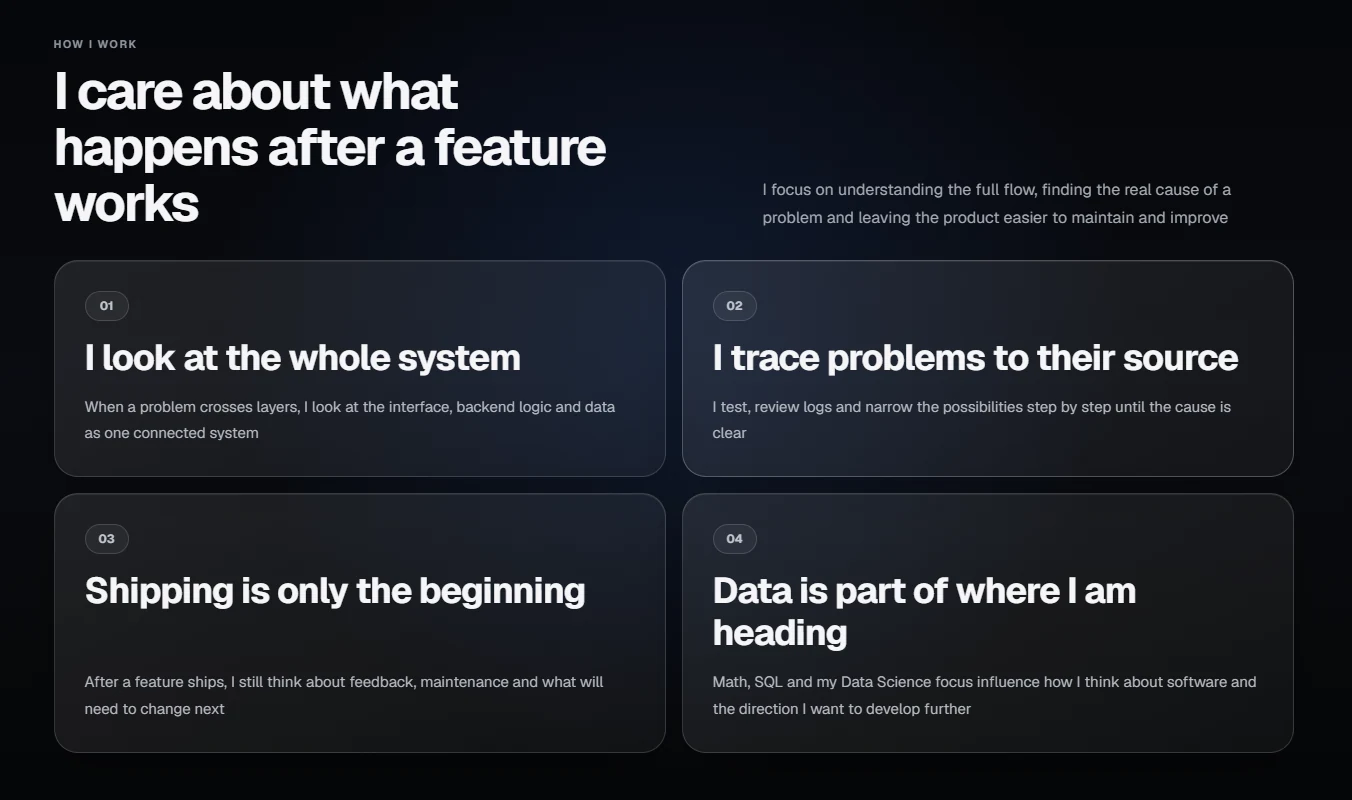
The interface tells that journey as the visitor scrolls
One browser object stays in place while the screen, narrative, and light-dark tone change chapter by chapter. Motion supports the story order instead of becoming a separate performance.
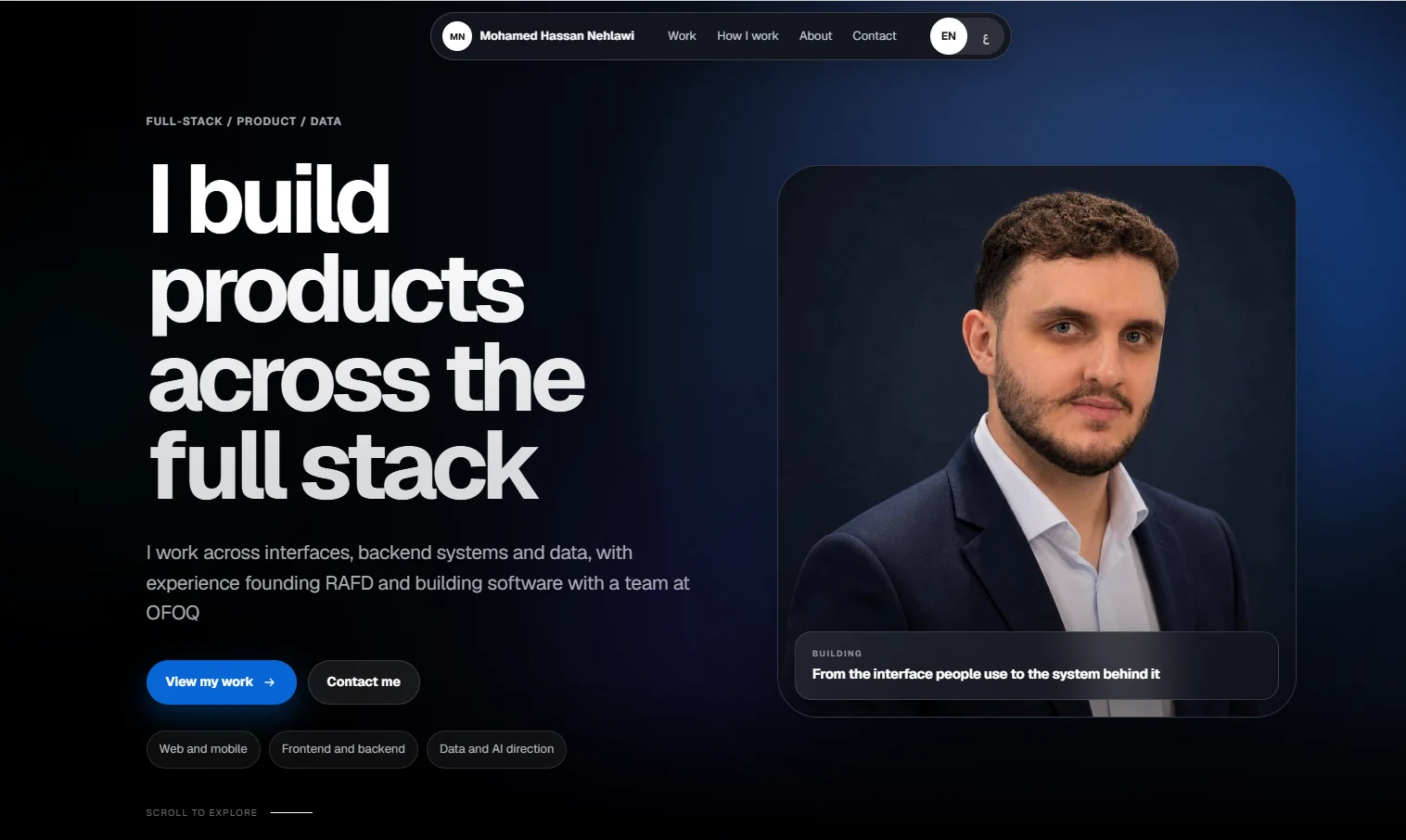
Instead of a CV on the web, the first screen explains how the work is built
The opening does not try to say everything. It establishes the person, the scope across interface, backend, and data, then gives one direct path into the work.
Personal identity · Full-stack · Product · Data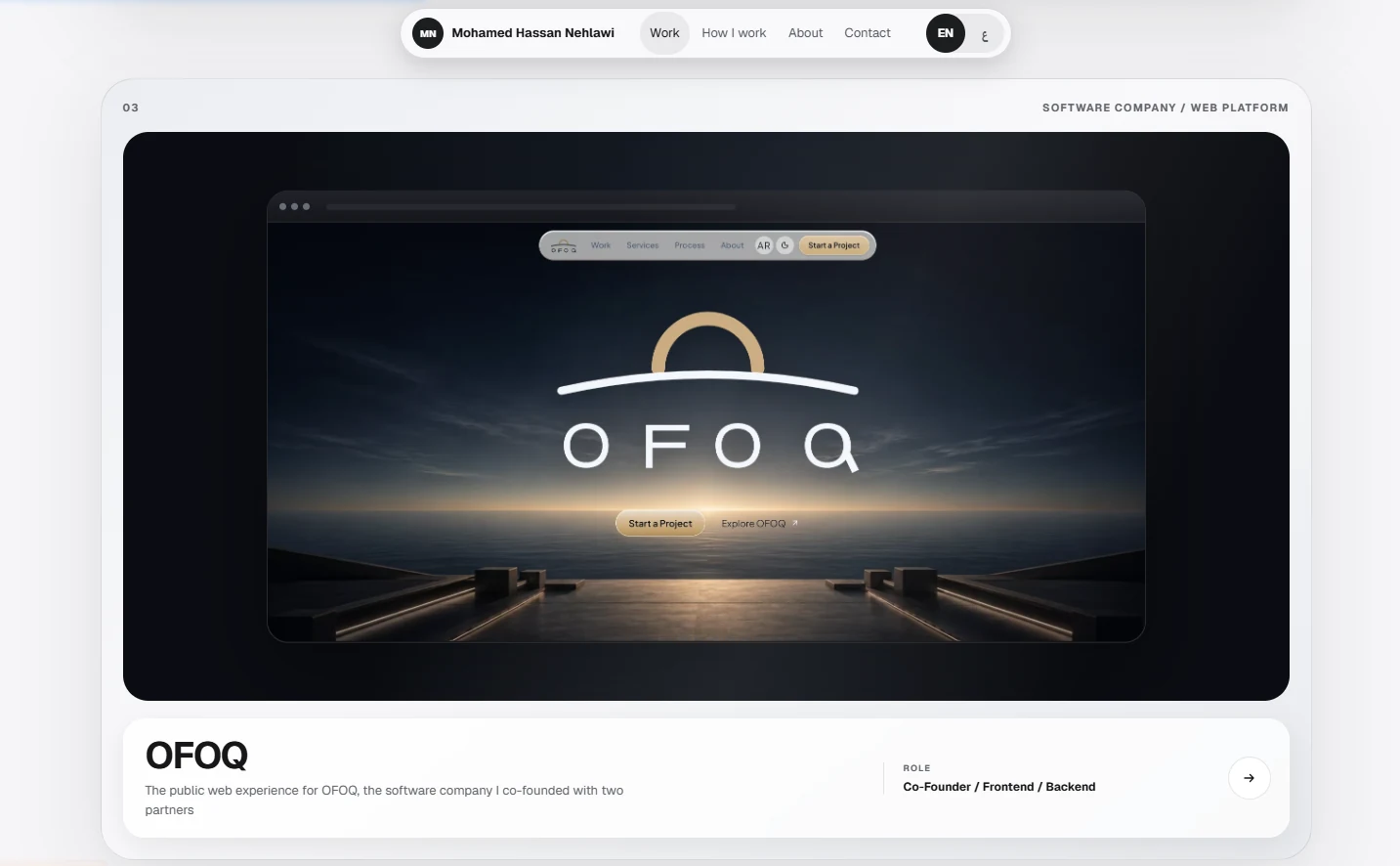
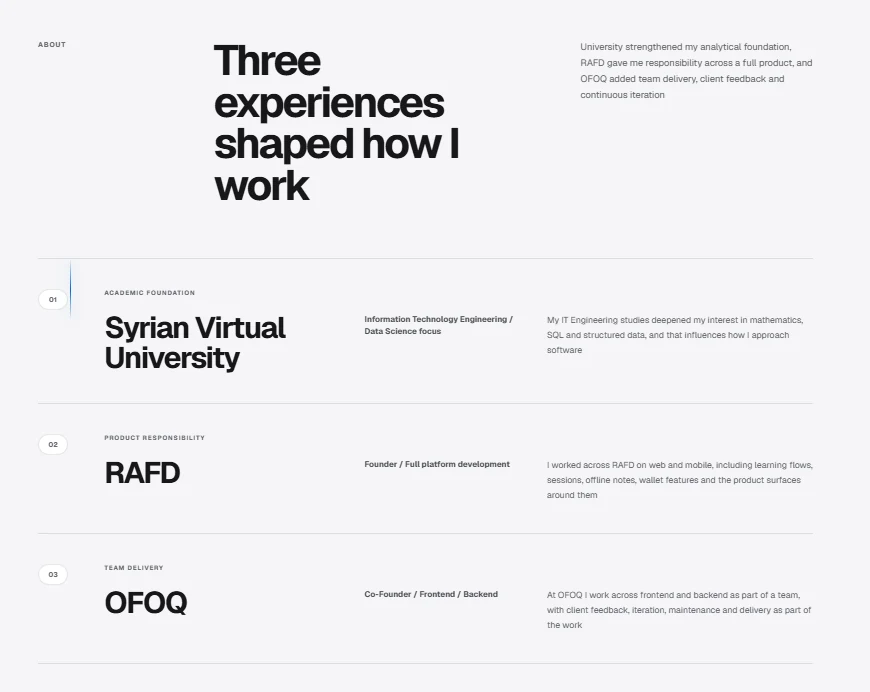
Small decisions make the portfolio feel made for a person rather than generated from a template
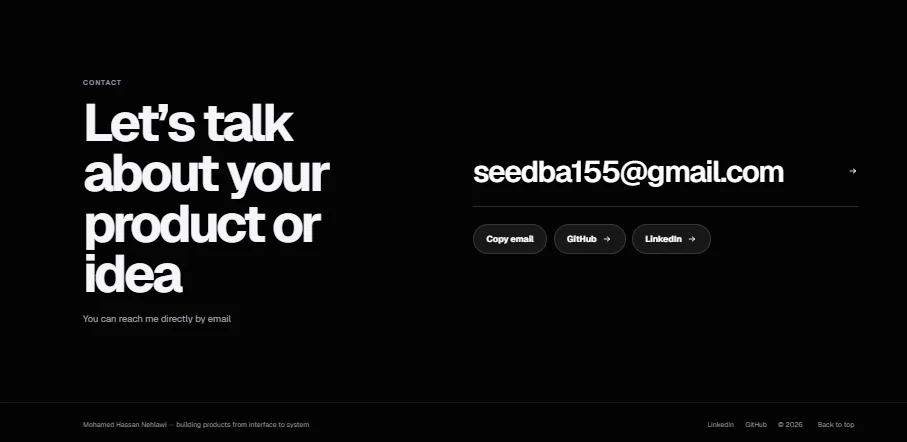
Headline scale, spacing, browser framing, theme transitions, concise copy, and the dominance of email at the end are all intentional. Even the experience section does more than list names and dates: every chapter explains what it changed in the way the work is approached.
- Clear visual hierarchy
- Responsive without losing the story
- RTL/LTR support
- Reduced Motion support
- Dimensioned media to reduce CLS
- One direct final CTA